 Never Ending Movie Carnival
Never Ending Movie Carnival
Never Ending Movie Carnival
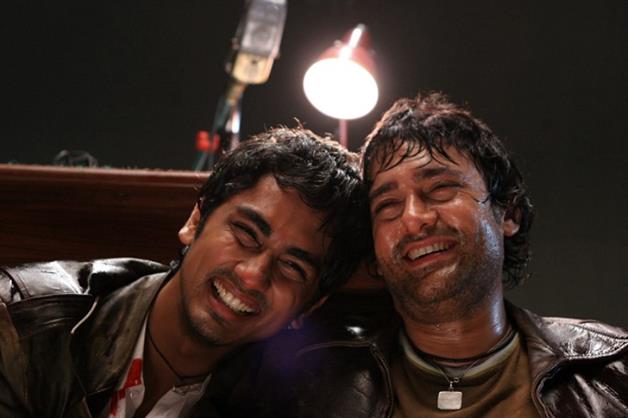
Rang De Basanti turns 20: Remembering the cult
"Zindagi jeene ke do tareeke hote hain
Ek, joh ho raha hai usse hone do
Bardaast karte jao
Nahin toh Zimmedari lo
Usse badalne ki"
Rakesh Om Prakash Mehra's second directorial ‘Rang De Basanti’ (RDB) had connected well and deeply with the audience with its strong, albeit risky, messaging but also for a solid emotional core.
As the film turns 20 today, I am overcome by the strong emotions which had gripped me with the same level of intensity that did twenty years back.
Narrated from the perspective of a Brit student , Sue Mckinletly (Alice Patten) who comes to India to make a documentary on our freedom struggle, RDB sublimely becomes the voice of her heartfelt and observant experiences with her subjects and their life-altering journey.
Sue imagines the slackers to be freedom fighters from the past, spots the hidden fire in their belly. She probably prophesizes their devastating end and the very conflict of ‘Rang De Basanti’ - the gang turns vigilantes after their hope of getting justice is crushed by the corrupt political machinery of our country when their friend's (Soha Ali Khan, the only girl in their group) fiancé and flight lieutenant, Ajay Rathod (R Madhavan) becomes a casualty in a faulty MIG plane crash.
Mehra, whose first outing in 2001, ‘Aks’, was a commercial failure, RDB broke many records registering staggering collections at the box office.
Beyond its commercial success, the film also resurrected Aamir Khan from a lull phase and a disastrous ‘Mangal Pandey’.
As a wayward and the most senior guy of the group, Khan's Daljit was the lever of the chaotic transformation and the mobiliser of the seething awakening that the group undergoes. It was probably his finest performance in his two decades career that also saw his perfection over the Punjabi accent.
Watch him out in the deeply hurting scene where he breaks down on Sue's shoulders after the cruel lathi charge by the police at the India Gate during their silent protest.
His craft whiplashed the naysayers who had discarded ‘Aks’, a film that was probably ahead of its time. In RDB, he was more surefooted and sorted with the setting and a narrative that hopped two different timelines of past and present, the national capital milieu sumptuously covered under the competent lenses of cinematographer Binod Pradhan and an arresting music by A R Rahman - The title track and 'Masti ka Paathsaala' remain seminal chartbusters.
Mehra drew wonderful performances from the brilliant ensemble - Atul Kulkarni, Siddharth, Kunal Kapoor, Kirron Kher and the OG actress, Waheeda Rehman. The scene that captures Soha's shock upon hearing about her fiancé's demise on TV jolts you. Another one, that sees Rehman's devastation when the body of her son arrives at the door, while 'Luka Chhupi' plays along, is a deeply pensive moment.
A film like RDB would have been difficult to make today considering the current political scenario and the degree of curtail imposed on the creative freedom. But for the intellectually driven and discerning audience, it remains a masterpiece.

Ahwaan Padhee, is an IT Techie/Business Consultant by profession and a film critic/cinephile by passion, is also associated with Radio Playback as well, loves writing and conducting movie quizzes. More By Ahwaan Padhee